
AI personaAI character
Raven
Mysterious & calm
Unhurried, private and difficult to read. Raven is at her best in noir scenes where the relationship has a secret in it.
A story you can hear
A roleplay call is not a script read aloud. It is a shared scene that changes because of what you say, how you say it and the pauses you leave behind. The voice creates the room; you decide what happens in it.

Now entering
Slow burn · strangers
Set the premise
An AI roleplay call is an improvised voice scene with a synthetic character. You bring a premise, a role and a mood; the character responds in voice, in real time, within the limits of the platform. Unlike an audiobook or a pre-recorded fantasy, the scene is supposed to react to you.
That responsiveness is the appeal — and the difficult part. A convincing scene needs more than a good voice. It needs a character who remembers the relationship, a model that can follow an unexpected turn, and enough restraint to leave space for your contribution.
Roleplay is not a commitment. You can end a scene, restart it or change direction. A good platform should make that easy rather than treating every call as a performance you owe the character.
The difference
An audiobook performs at you. A roleplay call waits to hear what you do next.
Casting
Chemistry depends on the role as much as the voice. A mysterious stranger, a warm companion and a confident rival will turn the same premise into completely different stories.
AI voice personalities · fictional adults
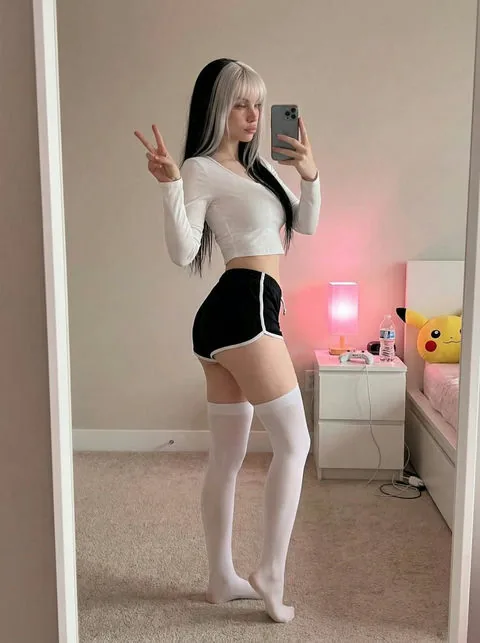
Mysterious & calm
Unhurried, private and difficult to read. Raven is at her best in noir scenes where the relationship has a secret in it.
Curious & adventurous
Expressive and quick to build worlds. Ayla suits fantasy and travel scenes that need momentum, humour and a little mischief.

Poised & amused
Dry, elegant and always half a step ahead. Camille turns hotel bars, dinners and professional settings into private games.

Direct & self-possessed
A natural scene partner for power dynamics and rivalry. Vale sets a pace and makes you answer for yours.
Starting points
Each premise gives the voice somewhere to begin. Keep the setup loose enough that the character can surprise you.
A table for two, a half-finished story and the sense that neither of you wants the evening to end. Slow, warm and built on attention.
A dim hotel bar, a voice that knows more than it should, and a question you cannot stop answering. Noir atmosphere with a private edge.
A companion, a dangerous map and a night where every playful choice raises the stakes. The voice carries the world around you.
A delayed train, an empty platform and one unanswered question. Two adults with nowhere to be, deciding how honest to be.
No plot, no performance. Two voices keeping the dark at bay until one of you says something more revealing than intended.
A long-haul signal from someone on the other side of the galaxy — and a connection that should not exist. Yearning at light speed.
Director's console
Pick a starting scenario and see how the character, setting and relationship change the energy. Choose a setting that fits your mood.
Scene planner
A strong premise is specific about place, relationship and tension. For a simple starting point, read how to create a shared conversation scene.
Selected scene
The Last Train Home
The last carriage is almost empty. Raven is not supposed to be on this train, and neither are you. Start with small talk; let the silence do the rest.
The Last Train Home selected.

Slow burn · strangers
Raven · one-night encounter · 8–12 min
Scene craft
A roleplay call fails when it becomes a monologue. The strongest scenes are built from five simple pieces, and none of them require an elaborate backstory.
Where are you, and why are you still talking? One clear situation is enough. “The last train” does more work than a page of lore.
Strangers, exes, colleagues, rivals, lovers. The relationship decides what is unsaid and what is permitted.
Something should be at stake, even if it is only the risk of admitting attraction. Tension gives the voice a reason to slow down.
A sound, a temperature, a smell. Concrete details make a synthetic voice feel located in a real room.
Good scenes end before they thin out. Decide in advance how you will close the call, and leave the last line slightly unresolved.
The carriage lights flicker. Raven is standing by the window, coat still on, watching your reflection rather than you.
“You're early.”
“You said the last train was at midnight.”
“I did. I didn't say I'd be on it.”
“Should I be worried?”
“Only if you were hoping to get home without thinking about me.”
Original demonstration dialogue · adult fictional characters · non-graphic. It shows pacing and implication, not an audio transcript.
Technical reality
Promotional pages rarely mention the moments that ruin immersion. These are the ones to test before you judge a character.
A character can sound subtly different between sessions, especially after updates. Ask whether the platform lets you lock a voice to a persona.
A pause of more than a second or two can read as confusion. Test a live call before paying for a long scene.
Continuity is uneven. A character may remember your name but forget the plot. Short scenes usually work better than multi-session epics.
Overlapping speech is difficult. If you tend to interject, check whether the platform handles interruptions or talks over you.
Before you begin
Roleplay depends on trust, even when one participant is artificial. Treat your own limits as part of the scene design rather than an interruption to it.
All scenes and characters here are fictional. The portraits represent virtual AI personas.
Do not give a home address, workplace, financial information or anything you would not put in a public profile. A scene does not need them.
If a platform supports preferences, state what you want and what you do not. A character that ignores a boundary is a product problem, not a challenge.
Ending a scene is not a failure. “I'm going to stop here” is a complete line, and you do not need the character's permission to leave.
Three moves
Use a third-party voice platform that explicitly supports live conversation. The steps below describe the experience, not a feature of this website.
Decide where you are and who the character is to you. Resist writing dialogue in advance; the scene needs room to react.
Tell the platform or character what you want from the scene and what is off-limits. Keep the language simple and direct.
“You're early” gives the character something to work with. A demand for a full fantasy gives it nowhere to go.
Roleplay questions
Practical answers about scripts, memory, content and what a voice platform can realistically deliver.
More roleplay answersIt is a live or near-live voice conversation in which an AI character plays a role inside a shared scenario. You provide the premise and respond in character; the platform generates the character's spoken replies. It differs from a pre-recorded audio story because it can react to you.
Your move
Pick a character, choose a premise and leave room for the line you did not expect. The story only becomes yours when you stop reciting and start responding.